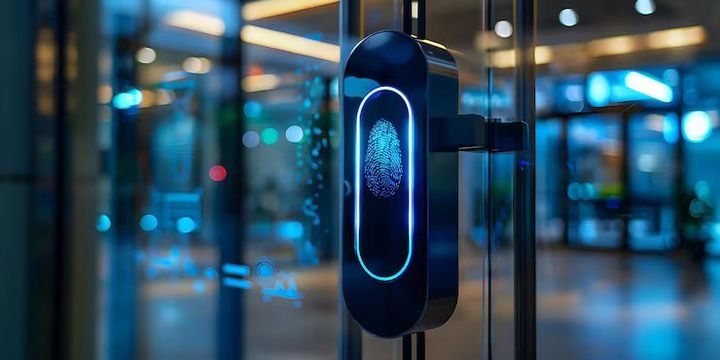
Biometric Door Access: A Complete Guide & Overview
Biometric door access refers to an advanced access control system that uses unique biological characteristics to verify identity before granting entry to a building, room, or restricted area. Instead of traditional keys, PIN codes, or swipe cards, biometric authentication systems rely on fingerprints, facial recognition, iris scans, palm vein recognition, or voice identification.
The primary reason biometric door access systems were developed is to enhance physical security and reduce unauthorized entry. Traditional access methods can be lost, duplicated, or shared. For example:
-
Physical keys can be copied.
-
Access cards can be stolen.
-
PIN codes can be shared or guessed.
Biometric credentials are linked to an individual’s unique biological data, making them significantly harder to replicate.
Modern biometric door locks are widely used in:
-
Commercial buildings
-
Data centers
-
Healthcare facilities
-
Educational institutions
-
Residential properties
-
Government offices
Biometric access control is often integrated with cloud-based access control platforms and security monitoring systems. These systems may also connect with video surveillance, cybersecurity infrastructure, and building management software to create a unified security environment.
Below is a simplified comparison between traditional and biometric access systems:
| Feature | Traditional Access (Key/Card) | Biometric Door Access |
|---|---|---|
| Identity Verification | Possession-based | Identity-based |
| Risk of Duplication | Moderate to High | Very Low |
| User Tracking | Limited | Detailed logs available |
| Integration with Cloud | Limited | Common |
| Multi-Factor Authentication | Optional | Frequently enabled |
As security technology has evolved, biometric authentication systems have become more accurate, scalable, and compatible with enterprise security frameworks.
Why Biometric Door Access Matters Today
The demand for advanced access control systems has increased due to rising concerns about physical security, cybersecurity threats, and regulatory compliance. Biometric door access plays a role in addressing these concerns by offering stronger identity verification.
Growing Security Requirements
Organizations handling sensitive data, such as financial institutions, healthcare providers, and IT infrastructure operators, face strict compliance obligations. Biometric authentication helps reduce the risk of unauthorized access and insider threats.
In environments like data centers or pharmaceutical labs, access logs are critical. Biometric systems automatically record:
-
Entry and exit timestamps
-
User identity
-
Location accessed
This creates a reliable audit trail that supports compliance audits and internal investigations.
Reduced Credential Misuse
Card-based systems allow credentials to be shared. In contrast, fingerprint door locks and facial recognition access control are tied directly to an individual’s physical characteristics. This significantly reduces:
-
Credential sharing
-
Lost card replacement issues
-
Unauthorized duplication
Integration with Multi-Factor Authentication
Many organizations now use multi-factor authentication (MFA) in both digital and physical security. Biometric door access can function as:
-
A single authentication factor
-
Part of a two-factor or three-factor authentication model
For example:
-
Fingerprint + PIN
-
Facial recognition + mobile credential
-
Iris scan + smart card
This layered approach enhances enterprise risk management.
Impact Across Different Sectors
Biometric access control affects various industries:
-
Healthcare: Protecting patient data and controlled medication storage
-
Banking and finance: Securing vaults and data rooms
-
Education: Managing campus access
-
Residential complexes: Replacing traditional key-based entry
As smart building technologies expand, biometric door systems are increasingly integrated into Internet of Things (IoT) infrastructure.
Recent Trends and Updates (2025–2026)
Over the past year, biometric security technology has seen notable developments.
Expansion of Cloud-Based Biometric Systems (2025)
In early 2025, several security technology providers expanded cloud-based access control platforms that allow remote management of biometric credentials. Cloud integration enables:
-
Real-time monitoring
-
Centralized user management
-
Remote firmware updates
-
Advanced reporting dashboards
This shift supports hybrid workplaces and multi-site enterprises.
AI-Enhanced Facial Recognition (Mid–Late 2025)
Artificial intelligence algorithms used in facial recognition access control have improved in accuracy and reduced false acceptance rates. Recent improvements include:
-
Better performance in low-light conditions
-
Improved detection of spoofing attempts
-
Enhanced mask detection capabilities
Some manufacturers reported algorithm updates in Q3 2025 that improved recognition speed while maintaining compliance with data protection standards.
Privacy-Focused Biometric Storage (2025–2026)
A growing trend in 2025 and early 2026 is the use of on-device biometric template storage rather than centralized raw image storage. Instead of saving full fingerprint images, systems now store encrypted biometric templates.
This change supports stronger compliance with data privacy regulations and reduces cybersecurity risks associated with large-scale data breaches.
Mobile Credential Integration
Biometric door access systems are increasingly integrated with secure mobile identity apps. In 2026, many enterprise security frameworks combine:
-
Smartphone-based credentials
-
Biometric verification on device
-
Cloud identity management
This approach aligns with zero-trust security models used in corporate environments.
Laws, Regulations, and Compliance Considerations
Biometric door access systems are subject to various data protection and privacy regulations depending on the country.
Data Protection Regulations
In many jurisdictions, biometric data is classified as sensitive personal data. For example:
-
The General Data Protection Regulation (GDPR) in the European Union treats biometric data used for identification as special category data.
-
In the United States, certain states such as Illinois enforce biometric privacy laws requiring informed consent and clear data retention policies.
-
Countries in Asia-Pacific have strengthened personal data protection acts between 2024 and 2025, expanding oversight on biometric processing.
Organizations deploying biometric authentication systems must ensure:
-
Clear consent procedures
-
Defined data retention periods
-
Encryption of stored biometric templates
-
Restricted administrative access
Workplace and Surveillance Regulations
In corporate environments, biometric access control may be subject to labor and workplace privacy rules. Employers are generally required to:
-
Inform employees about data collection
-
Explain the purpose of biometric usage
-
Limit usage to legitimate security needs
Government and Public Sector Guidelines
Government buildings often follow national cybersecurity frameworks that mandate:
-
Risk assessments before deployment
-
Regular vulnerability testing
-
Incident response planning
Compliance with cybersecurity standards such as ISO/IEC 27001 and similar frameworks is increasingly common when integrating biometric door access systems.
Tools and Resources for Biometric Door Access
Several tools and resources can assist organizations and property managers in implementing and managing biometric security infrastructure.
Access Control Management Platforms
-
Cloud-based access control dashboards
-
Identity and access management (IAM) systems
-
Security information and event management (SIEM) software
These platforms support centralized credential management and reporting.
Risk Assessment Templates
Security risk assessment templates help evaluate:
-
Entry points
-
User access levels
-
Data protection measures
-
Cybersecurity vulnerabilities
Compliance Checklists
Organizations may use regulatory compliance checklists covering:
-
Data encryption standards
-
Consent documentation
-
Incident reporting procedures
Integration Tools
Biometric door systems often integrate with:
-
Video surveillance systems
-
Time and attendance tracking software
-
Building automation systems
Below is a simplified workflow showing how biometric access integrates into a security ecosystem:
| Step | Function |
|---|---|
| User Enrollment | Biometric template captured and encrypted |
| Credential Assignment | Access rights defined in system |
| Authentication Attempt | User presents biometric data |
| Verification | System compares template |
| Access Decision | Door unlocks or denies entry |
| Audit Log | Event recorded for compliance |
Organizations often combine these tools to create a layered security strategy aligned with cybersecurity best practices.
Frequently Asked Questions
What is biometric door access?
Biometric door access is a security system that uses unique biological traits, such as fingerprints or facial recognition, to verify identity before granting physical entry to a building or room.
Is biometric authentication more secure than key-based systems?
Biometric authentication reduces risks associated with lost or duplicated keys. However, overall security depends on proper encryption, system configuration, and compliance with cybersecurity standards.
How is biometric data stored?
Most modern systems store encrypted biometric templates rather than raw images. Templates are mathematical representations of biometric features, which improves data protection.
Are biometric door systems compliant with privacy laws?
Compliance depends on how the system is implemented. Organizations must follow applicable data protection regulations, obtain informed consent when required, and implement strong security safeguards.
Can biometric access systems be integrated with other security tools?
Yes. Many biometric door access systems integrate with cloud-based access control platforms, surveillance systems, and identity management software to provide centralized monitoring and reporting.
Conclusion
Biometric door access systems represent a significant evolution in physical security technology. By replacing traditional keys and cards with biometric authentication, these systems strengthen identity verification and reduce credential misuse.
Recent developments in AI-powered recognition, encrypted template storage, and cloud-based access control have expanded their functionality and scalability. At the same time, regulatory frameworks increasingly emphasize data protection and privacy compliance.