Importance
The significance of SMT machines continues to grow due to several key factors:
Key factors include:
-
Rising electronics demand
The surge in smartphones, IoT devices, EVs, and consumer electronics has created an ever-growing need for fast, efficient PCB assembly.
-
Miniaturisation
As devices get smaller and more complex, SMT supports the placement of extremely tiny components (such as 01005 and micro-BGAs) with remarkable accuracy.
-
Automation and quality assurance
Automated SMT machines ensure precision, reduce human error, and enhance production consistency through integrated inspection systems.
-
Cost efficiency and scalability
These machines improve production speed and allow manufacturers to scale efficiently while maintaining high product reliability.
-
Global competitiveness
Nations and industries adopting advanced SMT technology remain more competitive in meeting electronics manufacturing demands.
SMT machines affect the entire electronics value chain—from circuit designers and assembly engineers to manufacturers and end users—by addressing the need for speed, precision, and miniaturisation.
Recent Updates (2024–2025)
The years 2024–2025 have brought notable developments in SMT machine technology and electronics manufacturing.
Key trends include:
| Trend | What’s Happening | Implication |
|---|
| Industry 4.0 / AI | Data-driven machines with predictive analytics | Higher productivity, fewer defects |
| Miniaturisation | Handling ultra-small components (01005 and smaller) | Improved placement precision |
| Automation | Lights-out manufacturing and robotics | Reduced labour, faster production |
| Modularity | Flexible machine configurations | Faster product changeovers |
| Cleanroom control | Adoption of stricter environmental standards | Better yield and reliability |
Additional updates include:
-
Market Growth
The global SMT equipment market grew from around USD 5.8 billion in 2024 to over USD 6.3 billion in 2025.
-
Smart Manufacturing
IoT sensors, machine learning, and real-time analytics are now integrated into SMT lines for predictive maintenance and process optimization.
-
Supply Chain Flexibility
Manufacturers are adopting modular systems to handle changing demand and component availability.
These developments reflect a shift toward intelligent, automated, and flexible electronics production systems.
Laws or Policies
SMT machine usage is governed by multiple national and international regulations to ensure safety, quality, and environmental compliance.
Key regulatory areas include:
-
BIS Compliance (India)
Electronics manufacturing must meet Bureau of Indian Standards requirements for safety and conformity.
-
Legal Metrology Rules
Packaged electronic goods must include mandatory labeling such as manufacturer details and origin.
-
RoHS Directive
Restricts hazardous substances like lead and cadmium in electronic products.
-
ISO Cleanroom Standards
Standards such as ISO 14644-1 ensure controlled environments for high-quality PCB assembly.
-
Safety and Import Regulations
Machines must comply with industrial safety norms and equipment import guidelines.
These frameworks ensure reliable, safe, and environmentally responsible manufacturing.
Tools and Resources
Various tools and resources help professionals understand and optimize SMT processes.
Key resources include:
-
Industry reports for market insights and future trends
-
Technical guides explaining SMT assembly processes
-
Best-practice handbooks for component handling and inspection
-
IPC standards (SMEMA, HERMES) for machine interoperability
-
Cleanroom setup guides for controlled production environments
-
Manufacturing layout planners for efficient SMT line design
-
Training programs and certifications for operators and engineers
-
Monitoring software for performance tracking and predictive maintenance
These resources support both learning and practical implementation of SMT technology.
FAQs
Q1: What machines are used in an SMT line?
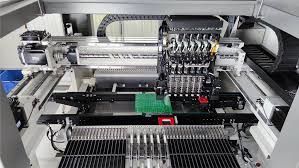
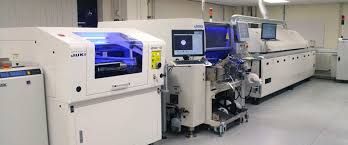
Typical SMT lines include solder paste printers, pick-and-place machines, reflow ovens, inspection systems (AOI/X-ray), and conveyors.
Q2: How is SMT different from through-hole technology?
SMT mounts components directly onto PCB surfaces, while through-hole technology involves inserting leads into drilled holes. SMT enables smaller and denser assemblies.
Q3: What challenges exist in SMT production?
Challenges include handling ultra-small components, ensuring precise alignment, maintaining solder quality, and preventing defects during reflow.
Q4: How are SMT machines evolving?
Modern machines include AI-based inspection, real-time analytics, adaptive feeders, and automated calibration systems.
Q5: What compliance factors should be checked?
Manufacturers must ensure compliance with BIS standards, RoHS guidelines, ISO cleanroom norms, and safety certifications.
Conclusion
SMT machines are central to modern electronics manufacturing, enabling precise, high-speed assembly of compact and complex circuits.
With advancements in automation, AI, and modular production systems, SMT technology continues to evolve rapidly. Understanding its trends, tools, and regulatory requirements helps professionals and learners navigate the future of electronics manufacturing effectively.