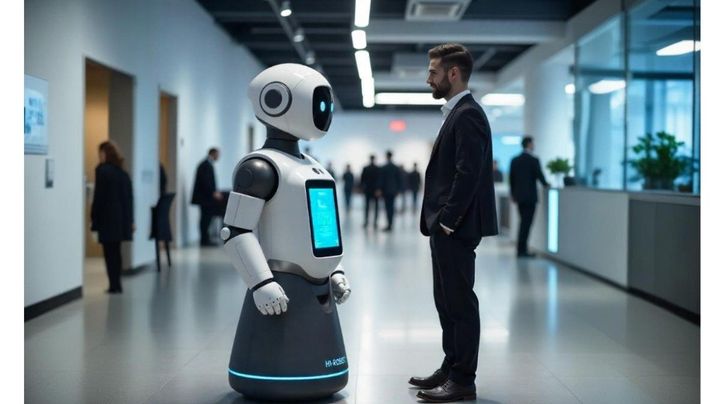
Humanoid Service Robots: An Explore Guide with Key Insights and Helpful Details
Humanoid robots are machines designed to resemble human form and movement, often equipped with sensors, artificial intelligence, and autonomous decision-making capabilities. Their development began decades ago with early mechanical prototypes, but modern advancements in robotics, computer vision, and machine learning have transformed them into capable systems that can interact, navigate, and respond in environments built for humans.
They exist because many real-world tasks require mobility, perception, or communication similar to what humans naturally perform. As technology continues to advance, humanoid robots are being developed to support tasks that involve interaction, guidance, monitoring, or assistance. Their design allows them to use tools, reach objects, and follow natural pathways, making them adaptable in areas where traditional robots may not function efficiently.
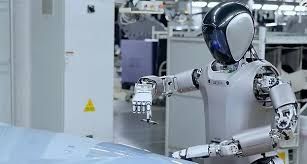
The growth of AI, machine learning, and robotics platforms has made humanoid robots more capable, responsive, and suitable for research, public engagement, and logistical support.
Importance – Why Humanoid Robots Matter Today
Humanoid robots hold importance because they provide new possibilities for environments where adaptable, reliable, and intelligent assistance is useful. Their value is especially visible in tasks that require consistent performance, physical capability, or natural interaction with people.
They matter today because:
- They support tasks that are repetitive or physically demanding
- They can operate in settings where continuous monitoring is needed
- They help reduce exposure to risky conditions
- They contribute to research, advanced simulation, and robotics education
Humanoid robots influence areas such as public infrastructure, learning environments, healthcare support, and customer-facing spaces. As global interest in automation increases, humanoid robotics has become part of discussions on digital transformation, intelligent systems, and future mobility.
High-value research keywords—such as AI automation systems, robotics technology trends, intelligent robotics solutions, future of AI robotics, and autonomous machine learning applications—reflect the rising demand for educational information about humanoid robot development.
Recent Updates – Trends and Developments
The field of humanoid robotics continues to evolve due to improvements in sensors, artificial intelligence, and mechanical design.
Key trends include:
-
Integration of advanced AI models
Robots now process text, speech, images, and gestures together for more natural interaction -
Improved mobility and balance
Better actuators and lightweight materials allow smoother walking and terrain adaptation -
Human-robot collaboration focus
Systems are designed for safer, more predictable interactions with people -
Wider adoption in public environments
Used in educational institutions, transport hubs, and research labs -
Enhanced perception technologies
Advanced sensors improve environmental awareness and object recognition
These developments show that humanoid robots are becoming more interactive, stable, and practical for real-world applications.
Laws or Policies – Regulatory Influence
Humanoid robots are governed by broader frameworks related to artificial intelligence, safety, and data protection.
Key regulatory themes include:
-
AI governance principles
Promote transparency, accountability, and human oversight -
Data protection rules
Ensure responsible use of cameras, microphones, and collected data -
Robotics safety standards
Define safe motion limits, emergency controls, and interaction boundaries -
Ethical development programs
Encourage responsible research and testing practices -
Public deployment guidelines
Require evaluation and safety checks before use in public spaces
These policies aim to balance innovation with safety, privacy, and ethical responsibility.
Tools and Resources – Platforms for Learning and Development
Various tools support learning, simulation, and development in humanoid robotics.
Simulation and Testing Tools:
- Gazebo – Physics-based simulation for robot behavior
- NVIDIA Isaac Sim – Advanced environment modeling platform
- Webots – Open-source robotics simulator
AI and Robotics Frameworks:
- ROS 2 (Robot Operating System) – Connects sensors, actuators, and AI modules
- OpenCV – Computer vision and image processing
- PyTorch and TensorFlow – Machine learning model development
Educational Resources:
- MIT OpenCourseWare – Robotics and AI courses
- IEEE Xplore – Research papers and technical studies
- Robotics design databases – Comparative system insights
Analytical Tools:
- AI trend dashboards
- Robotics analytics platforms
- Machine learning evaluation tools
These resources help learners and professionals explore humanoid robotics effectively.
Example Comparison Table – Key Features
| Feature Category | Typical Capabilities | Relevance |
|---|---|---|
| Mobility | Walking, balancing, coordination | Enables navigation in human environments |
| Perception | Vision, audio sensing, mapping | Supports environmental understanding |
| AI Reasoning | Decision-making, task planning | Enables independent operation |
| Safety Controls | Collision avoidance, emergency stop | Ensures safe interaction |
| Connectivity | Cloud updates, wireless systems | Expands functionality and data access |
FAQs
What defines a humanoid robot?
A humanoid robot has a human-like structure or movement pattern, allowing it to interact naturally and navigate human environments.
Are humanoid robots fully autonomous?
They combine autonomous capabilities with programmed instructions. Complex decisions may still rely on predefined rules.
Why is advanced AI used in humanoid robots?
AI helps robots understand speech, recognize objects, plan actions, and adapt to different environments.
Where are humanoid robots commonly used?
They are used in research labs, education, public information centers, and interactive service environments.
What challenges still exist?
Challenges include improving stability, communication, precision, and safe human interaction.
Conclusion
Humanoid robots represent a major advancement in intelligent systems, combining artificial intelligence, mechanical engineering, and human-centered design.
As technology continues to evolve, these robots are becoming more capable, interactive, and adaptable. With strong policy frameworks, advanced tools, and ongoing research, humanoid robotics remains a key area shaping the future of automation and intelligent technology.