Orbital Welding Machines: A Complete Guide with Key Insights and Helpful Tips
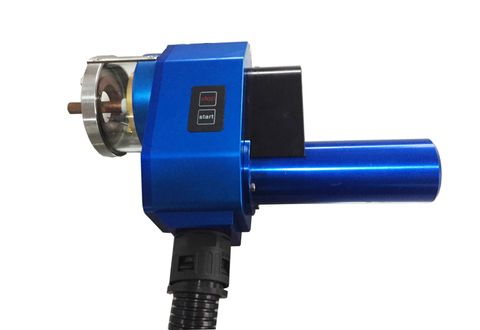
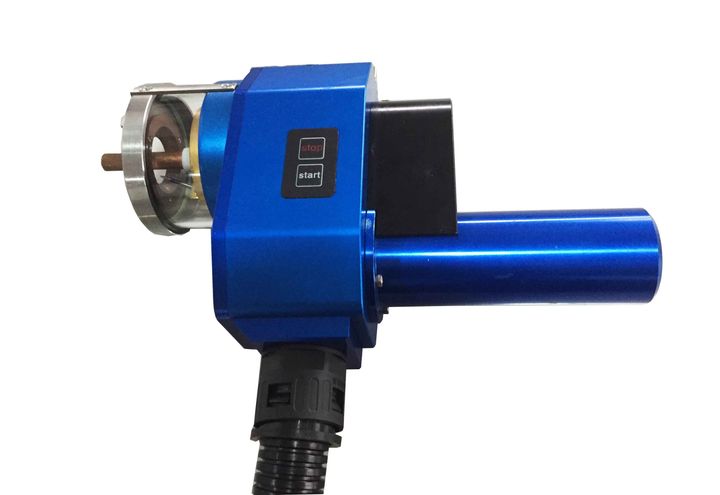
Orbital welding machines are automated systems designed to perform precise, repeatable welding by rotating the welding arc around a fixed workpiece. They are often used for joining tubes, pipes, and components where high-quality welds are necessary. The idea behind orbital welding emerged from the need to reduce operator error and maintain consistent weld quality across industries that depend on strong, clean, and uniform joints.
These machines work on the principle of automated motion control. Instead of manual handling, the torch follows a programmed path around the material, which helps maintain stable heat input, controlled speed, and uniform penetration. This approach supports applications in sectors such as advanced manufacturing, aerospace technology, semiconductor production, and pharmaceutical processing, where welding precision directly impacts reliability and long-term performance.
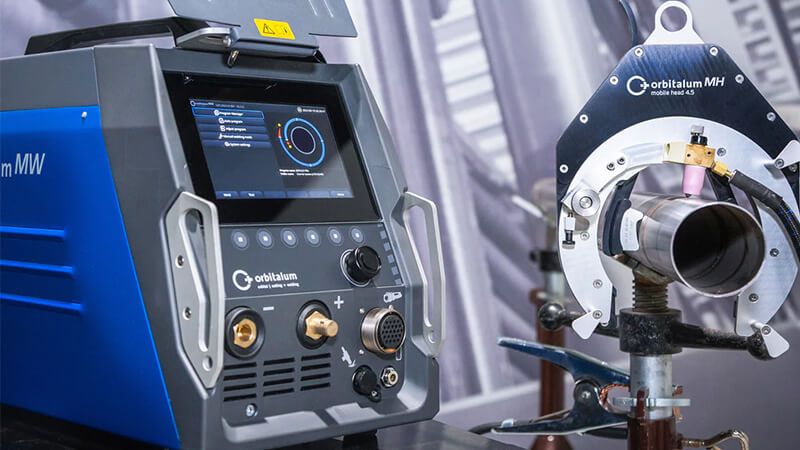
Automation in welding also exists to handle the complexity of modern materials. As alloys, thin-walled tubing, and high-purity piping systems became more common, conventional techniques sometimes struggled to maintain the same accuracy. Orbital welding machines were developed to address these engineering challenges while ensuring consistency, repeatability, and clean weld profiles.
Importance
Orbital welding machines matter today because manufacturing and infrastructure systems increasingly depend on exact weld quality. Modern components are built with tighter tolerances, advanced materials, and higher expectations for durability. Automated welding processes help reduce variability, improve structural integrity, and support high-purity environments where contamination must be minimized.
This technology affects industries where reliability is essential. Examples include:
- High-purity piping systems, where uniform welds help maintain clean surfaces used for sensitive processes
- Aerospace and aviation structures, where consistent weld strength is critical to safety
- Energy systems, including pipelines and power-generation components that require controlled weld geometry
- Automotive and mobility technologies, which rely on precision joining for performance and longevity
Orbital welding helps solve problems such as inconsistent weld quality, human fatigue, and difficulty accessing tight or complex geometries. It also reduces risks like incomplete fusion or excessive heat input. Since the machine can be programmed and monitored, it delivers repeatable and reliable weld results.
Recent Updates
Orbital welding systems have seen several advancements in automation, sensing, and digital integration.
Notable trends include:
-
Adaptive welding control
Sensors automatically adjust heat input and travel speed in real time, improving weld consistency -
Data analytics and monitoring
Cloud-based systems track welding parameters and performance history for quality control -
Improved power supply design
Enhanced arc stability, waveform control, and calibration accuracy -
Compact orbital heads
Lighter and more flexible designs allow use in confined or complex environments -
Weld-quality visualization
Software generates real-time graphs of current, voltage, and travel speed
These updates highlight a shift toward automation, precision, and data-driven welding processes.
Laws or Policies
Orbital welding machines operate within general industrial safety and engineering standards.
Common regulatory areas include:
-
Equipment safety standards
Ensure electrical stability, shielding systems, and protective enclosures -
Operator training requirements
Ensure safe setup, monitoring, and maintenance of welding systems -
Material and weld-quality standards
Define weld geometry, joint preparation, and calibration requirements -
Workplace safety regulations
Cover ventilation, arc protection, and material handling -
Documentation and traceability
Require recording welding parameters for quality assurance
These policies ensure safe operations, reliable welds, and compliance with industry standards.
Tools and Resources
Various tools help operators and engineers manage orbital welding processes effectively.
Useful tools include:
-
Weld parameter calculators
Estimate current, voltage, and travel speed -
Welding procedure templates
Document setup details, materials, and configurations -
Arc monitoring software
Track real-time welding performance -
Digital inspection tools
Measure weld quality, alignment, and surface finish -
Technical reference platforms
Provide insights into welding materials, techniques, and troubleshooting -
Training modules
Offer guidance on setup, operation, and parameter selection
These tools support accuracy, consistency, and quality control in welding operations.
FAQs
What materials are commonly used in orbital welding?
Stainless steel, titanium, nickel alloys, and high-purity materials are commonly used due to their need for precise welding.
Is orbital welding limited to specific industries?
No. It is used in aerospace, energy, automotive, semiconductor, and advanced manufacturing sectors.
Why is orbital welding more consistent than manual welding?
Automation ensures constant speed, stable current, and uniform heat distribution, reducing variability.
Does it require special setup?
Yes. It involves proper joint preparation, parameter selection, and shielding gas control, though automation simplifies the process.
How does it support high-purity systems?
It produces smooth, contamination-free welds that maintain clean internal surfaces.
Conclusion
Orbital welding machines play a critical role in modern fabrication by providing precision, repeatability, and high-quality welds.
With advancements in automation, adaptive control, and digital monitoring, they continue to evolve as essential tools in advanced manufacturing. Understanding their function, tools, and regulatory context helps professionals maintain consistent, safe, and efficient welding operations.