Importance
Serverless computing matters today because digital systems increasingly require rapid deployment, continuous availability, and efficient scaling. As workloads grow more unpredictable, this model provides an adaptable way to handle fluctuations without manual intervention.
It affects developers, cloud architects, data engineers, platform designers, and organizations adopting cloud computing frameworks. Its benefits include simplified operations, automated scaling, and reduced administrative overhead.
Key challenges it helps solve:
-
Difficulty predicting resource needs
-
Manual management of servers and runtime environments
-
Slow deployment cycles
-
Limited scalability for event-driven workloads
-
Inefficient use of computing resources
Serverless architectures also support modern applications such as real-time analytics, automation workflows, API-driven systems, and microservices, making them highly relevant in today’s digital ecosystem.
Recent Updates
Recent developments show improvements in performance, flexibility, and integration.
Key updates include:
-
Enhanced runtime performance
Reduced cold-start times and optimized execution environments
-
Broader language support
Expanded compatibility with more programming languages and custom runtimes
-
Growth of container integration
Serverless now works alongside containerized environments for unified deployment
-
Expansion into AI and automation
Used for model inference, data processing, and workflow orchestration
-
Improved monitoring and observability
Better tracing, logging, and performance insights
-
Multi-cloud support
Tools now allow deployment across multiple cloud platforms
Overview Table: Platform Improvements
| Area of Update | Description |
|---|
| Runtime Performance | Faster execution and reduced delays |
| Language Support | More programming options and flexibility |
| Event Triggers | Expanded integrations with APIs and automation systems |
| Monitoring | Improved metrics, logs, and tracing |
| Multi-Cloud Support | Cross-platform deployment capabilities |
These updates reflect the shift toward more flexible and scalable cloud computing solutions.
Laws or Policies
Serverless computing is influenced by broader digital and cloud governance regulations.
Common policy areas include:
-
Data protection regulations
Ensure secure handling and storage of user data
-
Cybersecurity frameworks
Define encryption, authentication, and access control standards
-
Compliance and auditing requirements
Require logging, monitoring, and traceability
-
Cloud governance principles
Address workload distribution, risk management, and operational control
These policies support secure, transparent, and accountable cloud operations.
Tools and Resources
Various tools support the development and management of serverless systems.
Cloud platforms:
-
AWS Lambda
-
Google Cloud Functions
-
Azure Functions
-
IBM Cloud Functions
-
Oracle Functions
Development frameworks:
-
Serverless Framework
-
AWS SAM
-
Google Cloud Run integrations
-
Pulumi
-
Terraform modules
Monitoring and observability:
-
Datadog
-
New Relic
-
Prometheus
-
Cloud log aggregation tools
-
Application tracing platforms
API and workflow tools:
-
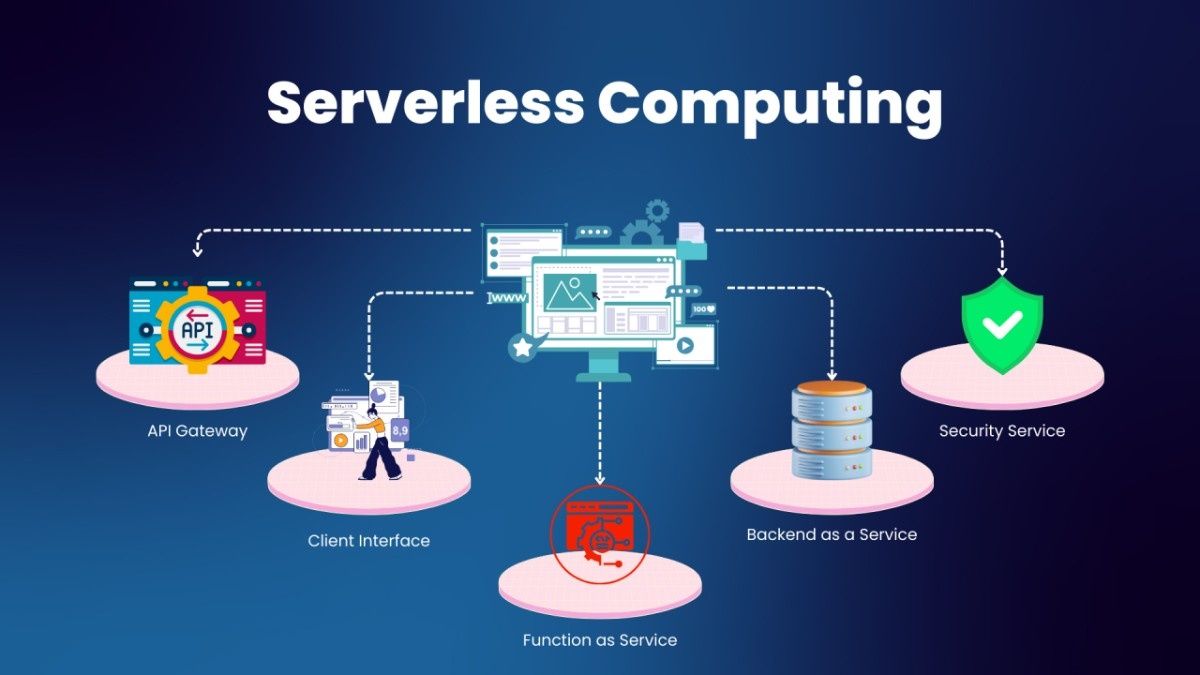
API Gateway systems
-
Event routing and messaging services
-
Data pipeline orchestrators
-
Automation workflow platforms
Educational resources:
-
Cloud documentation portals
-
Architecture guides and blueprints
-
Community tutorials and repositories
-
Technical blogs and learning platforms
These tools support efficient development, deployment, and monitoring of serverless applications.
FAQs
What is serverless computing?
It is a cloud model where applications run without managing servers, with automatic handling of execution and scaling.
How does scaling work?
Scaling is automatic. The system adjusts resources based on demand without manual intervention.
Is it suitable for large applications?
Yes, especially when built using microservices, APIs, and event-driven architectures.
How is security managed?
Through identity management, encryption, access control, and continuous monitoring.
What workloads benefit most?
Event-driven tasks, data processing, APIs, IoT systems, and automation workflows are well-suited for serverless computing.
Conclusion
Serverless computing is a key approach in modern cloud architecture, enabling scalable, efficient, and flexible application development without direct infrastructure management.
With advancements in performance, security, and multi-cloud integration, it continues to evolve as a reliable solution for dynamic workloads. Understanding its tools, trends, and policies helps organizations and developers build efficient and future-ready systems.