Explore CRM Integration with ERP & Marketing Tools: Complete Guide & Key Insights
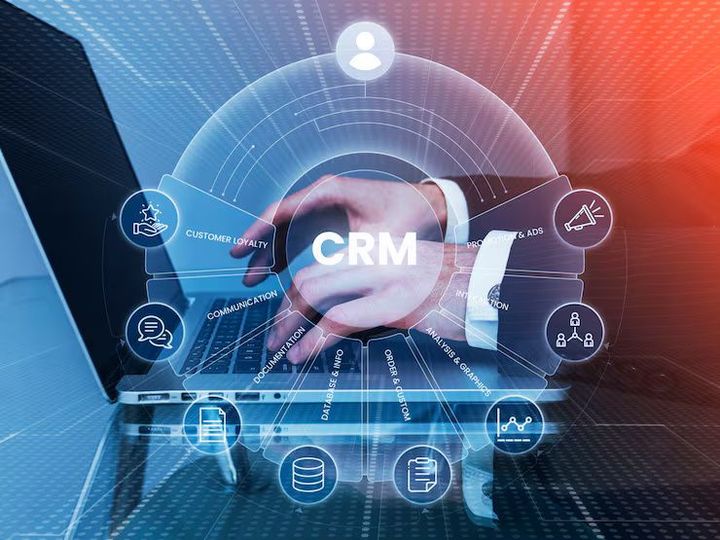
CRM integration with ERP and marketing tools refers to the structured connection between customer relationship management systems, enterprise resource planning platforms, and marketing technology systems. The purpose of this integration is to allow data to flow consistently across customer-facing and operational functions.
CRM systems focus on managing customer interactions, relationships, and engagement history. ERP systems manage internal operations such as finance, inventory, procurement, and order processing. Marketing tools support campaign planning, audience engagement, and performance tracking. When these systems operate independently, data becomes fragmented and difficult to reconcile.
Integration exists to create a unified operational view. It ensures that customer data, transactional records, and engagement signals remain aligned across departments, reducing manual reconciliation and improving organizational coordination.
Why CRM, ERP, and Marketing Integration Matters Today
Integration matters today because organizations operate in complex, multi-system environments. Customer journeys span marketing touchpoints, sales interactions, and operational fulfillment. Without integration, each function sees only part of the picture.
This topic affects multiple stakeholders:
-
Sales teams managing customer relationships
-
Marketing teams planning and evaluating campaigns
-
Operations and finance teams handling orders and billing
-
Leadership teams relying on accurate, cross-functional reporting
CRM integration helps solve challenges such as inconsistent customer records, delayed updates between departments, and limited visibility into end-to-end performance. It also supports faster decision-making by reducing data silos.
Key drivers behind increased integration include:
-
Growth of multi-channel customer engagement
-
Increased reliance on real-time data
-
Expansion of digital-first business processes
-
Need for consistent reporting across systems
As organizations scale, integration becomes foundational rather than optional.
Core Concepts Behind CRM–ERP–Marketing Integration
Integration is built around shared data models, synchronization rules, and workflow alignment. The goal is not to merge systems into one, but to ensure they exchange accurate and timely information.
Key integration concepts include:
-
Master data alignment, defining authoritative sources for customer and account data
-
Event-based synchronization, updating systems when specific actions occur
-
Process continuity, linking marketing, sales, and fulfillment stages
-
Access control, ensuring data is shared appropriately
For example, a customer created in a CRM system may automatically generate a corresponding record in the ERP system, while campaign responses from marketing tools update engagement history in the CRM.
A simplified concept overview is shown below:
| Integration Concept | Purpose |
|---|---|
| Master Data | Consistency |
| Synchronization Rules | Timely updates |
| Process Mapping | End-to-end flow |
| Access Control | Data protection |
These concepts guide how systems interact without disrupting core operations.
How CRM Integration Works in Practice
In practice, integration relies on defined workflows and data exchange mechanisms. These mechanisms may operate in real time or at scheduled intervals, depending on business needs.
A typical integrated workflow includes:
-
Marketing tools capturing campaign interactions
-
CRM systems recording leads, contacts, and opportunities
-
ERP systems managing orders, invoicing, and fulfillment
-
Status updates flowing back to CRM and marketing platforms
For example, when an opportunity is marked as completed in the CRM, the ERP system may automatically handle order processing, while marketing systems adjust audience segmentation.
A simplified process flow is shown below:
| Step | System Role |
|---|---|
| Campaign Interaction | Marketing Tool |
| Lead & Opportunity | CRM |
| Order & Billing | ERP |
| Status Feedback | CRM & Marketing |
| Reporting | Cross-system analytics |
This closed-loop flow improves alignment across departments.
Integration Models and Approaches
There are multiple approaches to integrating CRM with ERP and marketing tools. The choice depends on system architecture, data volume, and operational complexity.
Common integration models include:
-
Point-to-point integration, connecting systems directly
-
Middleware-based integration, using a central integration layer
-
API-driven integration, enabling flexible data exchange
-
Event-driven integration, reacting to system triggers
A simplified comparison is shown below:
| Integration Model | Key Characteristic |
|---|---|
| Point-to-Point | Simple but rigid |
| Middleware | Centralized control |
| API-Based | Flexible and scalable |
| Event-Driven | Near real-time updates |
Larger organizations often prefer middleware or API-based approaches to manage complexity and scalability.
Benefits of Integrated CRM, ERP, and Marketing Systems
Integrated systems provide operational and analytical benefits across the organization. These benefits are cumulative rather than isolated to a single department.
Key benefits include:
-
Improved data consistency across teams
-
Reduced manual data entry and reconciliation
-
Better visibility into customer lifecycle stages
-
More reliable forecasting and reporting
-
Stronger coordination between marketing, sales, and operations
A benefit overview is shown below:
| Area | Practical Impact |
|---|---|
| Data Quality | Fewer discrepancies |
| Efficiency | Streamlined workflows |
| Visibility | End-to-end insights |
| Coordination | Aligned teams |
These outcomes support both day-to-day execution and long-term planning.
Recent Updates and Integration Trends
Over the past year, CRM integration practices have evolved alongside automation and data governance trends.
In January 2025, technology discussions highlighted increased use of standardized APIs, reducing dependence on custom-built connectors.
By June 2025, organizations placed greater emphasis on near real-time synchronization, particularly between CRM and marketing systems, to support timely engagement analysis.
Another trend observed in October 2025 involved stronger validation and monitoring of integration data flows. Teams increasingly tracked synchronization errors and data mismatches as performance indicators.
A general comparison is shown below:
| Aspect | Earlier Approach | Recent Trend (2025) |
|---|---|---|
| Connectivity | Custom connectors | Standard APIs |
| Data Timing | Batch updates | Near real-time |
| Monitoring | Reactive | Proactive alerts |
| Governance | Informal | Defined ownership |
These trends reflect a shift toward reliability and transparency.
Laws, Data Protection, and Compliance Considerations
CRM integration with ERP and marketing tools must comply with data protection and privacy regulations, especially when personal data flows across systems.
In India, key regulatory influences include:
-
Digital Personal Data Protection Act, 2023, governing personal data handling
-
Information Technology Act, 2000, addressing data security obligations
-
Internal organizational data governance policies
During 2024–2025, increased emphasis was placed on consent management, purpose limitation, and controlled data sharing. Integrated systems must ensure that data flows align with approved usage purposes.
Compliance considerations influence integration design, access permissions, and data retention rules.
Tools and Resources Supporting CRM Integration
Several tools and frameworks support effective CRM–ERP–marketing integration. These resources focus on planning, monitoring, and governance.
Helpful resources include:
-
Data mapping and schema definition templates
-
Integration workflow diagrams
-
API documentation and testing tools
-
Data validation and reconciliation reports
-
Access and permission management frameworks
Key integration indicators often monitored are shown below:
| Indicator | Purpose |
|---|---|
| Sync Success Rate | Integration reliability |
| Data Latency | Timeliness |
| Error Frequency | Process stability |
| Record Consistency | Data quality |
These tools help maintain stable and auditable integrations.
Frequently Asked Questions About CRM Integration
Why integrate CRM with ERP systems?
Integration connects customer-facing activities with operational execution, improving visibility and coordination.
How does CRM integration support marketing teams?
It aligns campaign data with customer and transaction records, improving audience understanding and reporting.
Is real-time integration always necessary?
Not always. The required timing depends on business processes and data usage needs.
Can integration reduce manual work?
Yes. Automated data exchange reduces repetitive data entry and reconciliation.
Why is data governance important in integration?
Because integrated systems amplify the impact of errors, governance ensures accuracy, security, and compliance.
Conclusion
CRM integration with ERP and marketing tools enables organizations to connect customer engagement, sales processes, and operational execution into a cohesive system. By aligning data and workflows, integration reduces silos and supports more informed decision-making.
Recent trends highlight greater use of standardized APIs, near real-time synchronization, and proactive monitoring. At the same time, regulatory frameworks in India increasingly influence how integrated systems handle personal data.