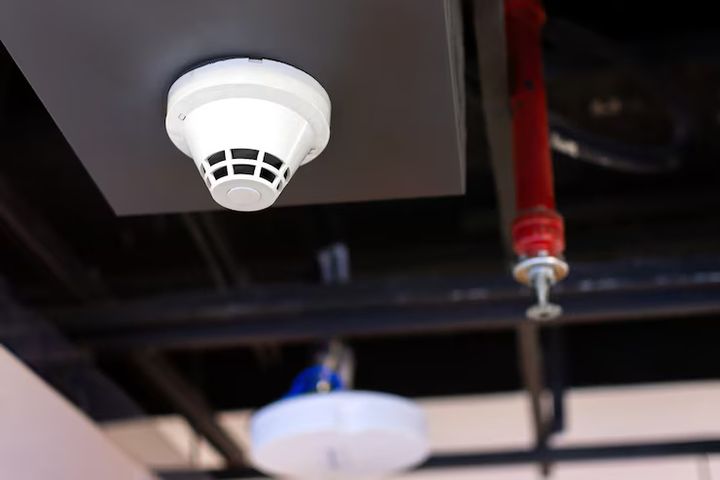
Choosing the Right Fire Detection Tech for Your Facility
There is a fire detection technique to protect life, property and operation by providing initial warnings when smoke, heat or flames are present. Facilities - from factories and warehouses to schools, hospitals and offices - detection system is necessary to fit their environment. When industries are expanded and the infrastructure becomes more complex, the demand for accurate, sharp and integrated fire detection systems has increased.
Fire detection has evolved from simple smoke alarms to advanced systems that connect sensors, artificial intelligence and network connection. These technologies help reduce the risk by enabling rapid withdrawal, emergency preparedness and fire oppression.

Importance
It is important to choose the right fire detection system for several reasons:
Life Security: Provides initial warning and withdrawal time.
Business continuity: Downtors and financial tapes are reduced due to fire deposits.
Compliance: Local fire codes and insurance requirements.
Adaptability: Different environments require different detection methods (eg kitchen heating detectors, smoke detectors for offices, flame detectors for chemical plants).
This decision affects construction managers, safety managers, employers, building owners and any person responsible for the safety of people and properties.
Newer updates
Recent development in fire detection technology, smart, highlights more reliable system:
AI operated system (2023–2024): Some detectors now use artificial intelligence to distinguish between real fire and false alarms, which reduces unnecessary clearance.
Wireless and IoT competition detectors: Modern systems are integrated with building management systems, which monitor real-time via apps and dashboards.
MultiSensor Detector: Equipment in a unit smoke, heat and carbon monoxide detection equipment that receives traction in both commercial and industrial functions.
Video -based fire detection (2024): Surveillance cameras equipped with flames and smoke recognition software are distributed in stock and high -risk areas.
These updates reflect a global change to smarter, connected and more energy -efficient fire safety systems.
Laws or guidelines
Finding fire is greatly influenced by national and international security regulations:
NFPA (National Fire Protection Association - US): NFPA 72 Firlines for four alarm system and from with performance standards.
European standards (EN 54): Fire detection in the EU and controls the alarm system.
India: The national building code (NBC 2016) requires automatic fire detection and alarm system in commercial and residential buildings over certain sizes.
OSHA (USA): Employers are required to provide a system of fire protection and detection suitable for the dangers in the workplace.
Local fire officer: Municipal fire departments often make inspection, test and maintenance programs compulsory.
Compliance does not only ensure security, but also legal security and insurance coverage.
Tools and resources
Many equipment and resources can help construction managers choose the right fire detection system:
NFPA Code Finder - online resources for fire safety codes and guidelines.
Evaluation template for fire safety risk - is available from OSHA, NFPA or local fire extinguishers.
Smartphone apps: Some IoT detectors come with other apps to monitor real -time.
System design software: Autosprinker or four alarm CAD helps design tool engineers.
Cost calculator: Online equipment provided by fire safety companies estimates the cost of installation and maintenance.
Comparison of fire detection technologies
| Type of Detector | Best For | Advantages | Limitations |
|---|---|---|---|
| Smoke Detectors | Offices, homes, schools | Quick response to smoldering fires | May trigger false alarms (dust, steam) |
| Heat Detectors | Kitchens, boiler rooms | Less false alarms, durable | Slower detection of smoldering fires |
| Flame Detectors | Chemical plants, fuel storage | Detects open flames quickly | Higher cost, maintenance needs |
| Multi-Sensor Detectors | Warehouses, mixed-use facilities | Combines multiple sensing methods | Higher initial investment |
| Video Fire Detection | Large open spaces, warehouses | Real-time monitoring, wide coverage | Dependent on camera quality |
question to ask
Q1. What is the most common type of fire detection system?
Smoke detectors are most commonly used when they detect fire at an early stage and cost -effective.
Q2. How often should the fire detection system be tested?
Most rules, such as NFPA 72, require monthly testing and annual professional inspection.
Q3. Are wireless fire detection systems reliable?
Yes. Modern wireless detectors use encrypted communication and battery backup, making them reliable and easy to install.
Q4. What is the role of IoT in the Fire Detection?
IoT enables detectors to send notifications to smartphones or centralized systems, improves the reaction time and integrated with other security measures.
Q5. Can a type of detector work for all features?
No. Each function has unique risks. For example, the kitchen may require heating nectors, while stores benefit from video -based systems.
Final thoughts
To choose the right fire detection technique requires balanced safety requirements, compliance with structural structure and legal standards. Modern progress-like AI, IoT- and multisensor system finds more accurate and reliable identity than before. With risk assessment, compliance with regulations and combination of the right equipment, convenience leaders can ensure the safety of people, property and operation.