Exploring Hydraulic Press Systems: Essential Basics, Working Process, and Industrial Use Cases
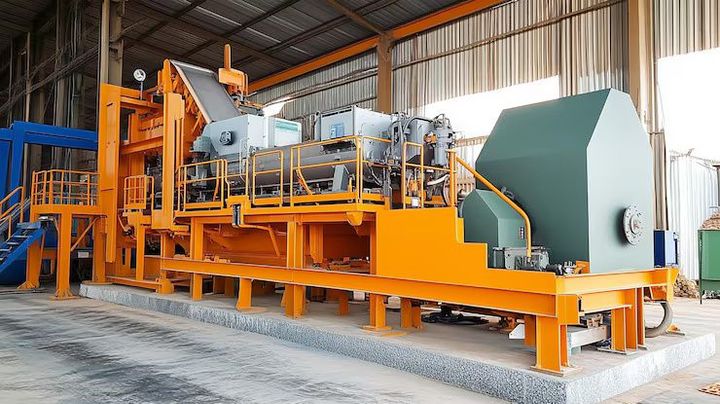
Hydraulic press machines are industrial devices that use fluid pressure to generate a compressive force. They are widely used in heavy industry for shaping, forming, and assembling materials, especially metals. The working principle is based on Pascal’s Law, which states that pressure applied to a confined fluid is transmitted equally in all directions.
These machines typically consist of a hydraulic cylinder, piston, pump, and control system. When pressure is applied to the hydraulic fluid, it moves the piston, producing a strong mechanical force. This force is then used to compress, bend, or shape materials into desired forms.
Hydraulic press machines are commonly found in industries such as automotive manufacturing, aerospace engineering, metal fabrication, and construction equipment production. They are designed to handle high loads and are capable of producing consistent and precise results, making them essential for large-scale industrial operations
Importance – Why Hydraulic Press Machines Matter Today
Hydraulic press machines play a critical role in modern heavy industry due to their efficiency, precision, and versatility. As industries continue to demand high-strength materials and complex shapes, these machines provide reliable solutions for manufacturing processes.
One of the main advantages is their ability to generate immense force with relatively simple mechanisms. This makes them ideal for tasks such as metal stamping, forging, deep drawing, and compression molding. Industries rely on hydraulic presses to produce components like automotive body panels, aircraft parts, and industrial machinery components.
Another key benefit is precision control. Unlike mechanical presses, hydraulic systems allow operators to adjust pressure, speed, and stroke length. This flexibility is especially important in applications requiring high accuracy and repeatability.
Hydraulic press machines also contribute to improved workplace safety. Modern systems include safety features such as overload protection, emergency stop functions, and automated controls. These features help reduce risks associated with heavy machinery operations.
Additionally, hydraulic presses support energy-efficient manufacturing processes. Advanced designs use optimized hydraulic circuits and energy recovery systems, reducing power consumption while maintaining performance.
Recent Updates – Trends and Developments in 2025
In the past year, hydraulic press technology has seen several advancements driven by automation, sustainability, and digital transformation.
One notable trend is the integration of smart control systems. In 2025, many manufacturers have adopted programmable logic controllers (PLCs) and industrial IoT sensors to monitor machine performance in real time. These systems help detect faults early, improve maintenance planning, and enhance operational efficiency.
Another important development is the use of servo-hydraulic systems. These systems combine hydraulic power with servo motor control, allowing for more precise motion control and reduced energy consumption. This trend has gained momentum in industries aiming to improve productivity while lowering environmental impact.
Sustainability has also become a key focus. Many hydraulic press manufacturers introduced eco-friendly hydraulic fluids and energy-efficient pumps in late 2024 and early 2025. These innovations help reduce carbon emissions and comply with environmental regulations.
Automation is another growing trend. Robotic integration with hydraulic presses allows for automated loading and unloading of materials, reducing manual labor and increasing production speed. This is particularly important in high-volume manufacturing environments.
Finally, digital twins and simulation software are increasingly used to design and optimize press operations. These tools allow engineers to test processes virtually before implementation, minimizing errors and improving efficiency.
Laws or Policies – Regulations Affecting Hydraulic Press Machines
Hydraulic press machines are subject to various safety and environmental regulations, depending on the country and industry. These regulations ensure safe operation, worker protection, and environmental compliance.
In India, hydraulic press machines must comply with safety standards under the Factories Act, 1948. This law outlines requirements for machine guarding, operator safety, and workplace conditions. Employers are responsible for ensuring that machines are properly maintained and that workers receive adequate training.
The Bureau of Indian Standards (BIS) also provides guidelines for industrial machinery safety and performance. These standards help ensure that hydraulic press machines meet quality and safety requirements.
Environmental regulations are equally important. The use of hydraulic fluids must comply with pollution control guidelines set by the Central Pollution Control Board (CPCB). Proper disposal and handling of fluids are required to prevent environmental contamination.
Globally, standards such as ISO 16092 (safety requirements for presses) and OSHA regulations in the United States influence best practices in hydraulic press operation. These standards emphasize risk assessment, safety devices, and regular inspections.
Compliance with these laws and policies is essential for maintaining safe and efficient industrial operations. Non-compliance can lead to operational disruptions and increased safety risks.
Tools and Resources – Helpful Technologies and Solutions
Several tools and resources support the effective use and maintenance of hydraulic press machines in heavy industry.
Hydraulic System Design Software
Engineering software tools are used to design and simulate hydraulic systems. These tools help engineers optimize pressure, flow rates, and system efficiency before actual implementation.
Industrial IoT Monitoring Systems
IoT-based monitoring systems track parameters such as pressure, temperature, and vibration. These systems provide real-time insights, enabling predictive maintenance and reducing downtime.
Maintenance Management Systems
Computerized maintenance management systems (CMMS) help schedule inspections, track repairs, and manage spare parts. These tools improve machine reliability and extend equipment lifespan.
Pressure Calculation Tools
Hydraulic pressure calculators are used to determine force requirements for specific applications. These tools help ensure that machines operate within safe and efficient limits.
Operator Training Simulators
Virtual training platforms allow operators to learn machine operation in a simulated environment. This reduces the risk of accidents and improves skill development.
Table – Types of Hydraulic Press Machines and Their Applications
| Type of Hydraulic Press | Key Features | Common Applications |
|---|---|---|
| C-Frame Press | Compact design, open front | Assembly, light forming |
| H-Frame Press | मजबूत frame, high strength | Heavy-duty applications |
| Four-Column Press | Uniform pressure distribution | Deep drawing, molding |
| Bench Press | Small size, portable | Laboratory and small-scale work |
| Hydraulic Forging Press | High force capacity | Metal forging, shaping |
FAQs – Common Questions About Hydraulic Press Machines
What is the working principle of a hydraulic press machine?
A hydraulic press works on Pascal’s Law, where pressure applied to a fluid is transmitted equally. This allows a small input force to generate a much larger output force.
Where are hydraulic press machines commonly used?
They are widely used in automotive manufacturing, aerospace, metal fabrication, and construction industries for tasks like forming, stamping, and molding.
How are hydraulic presses different from mechanical presses?
Hydraulic presses offer better control over pressure and speed, while mechanical presses are typically faster but less flexible in operation.
What maintenance is required for hydraulic press machines?
Regular maintenance includes checking hydraulic fluid levels, inspecting seals, monitoring pressure systems, and ensuring proper lubrication of components.
Are hydraulic press machines energy efficient?
Modern hydraulic presses are designed to be energy efficient, especially with the use of servo-hydraulic systems and optimized pump designs.
Conclusion
Hydraulic press machines are essential tools in heavy industry, providing the القوة and precision needed for complex manufacturing processes. Their ability to generate high الضغط with controlled movement makes them indispensable across various sectors.
With recent advancements in automation, energy efficiency, and digital monitoring, hydraulic presses are becoming more intelligent and sustainable. These developments not only improve productivity but also support environmental goals and workplace safety.