Industrial Robotics Manufacturers: A Guide to Modern Automation
Industrial robotics manufacturers develop robotic systems that automate repetitive, precise, and physically demanding production tasks across modern manufacturing environments.
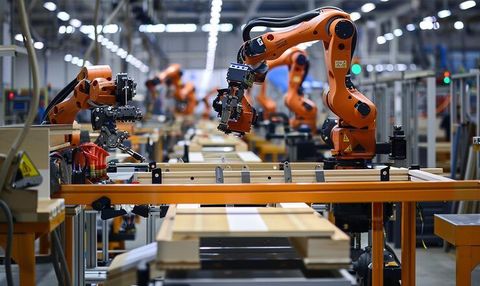
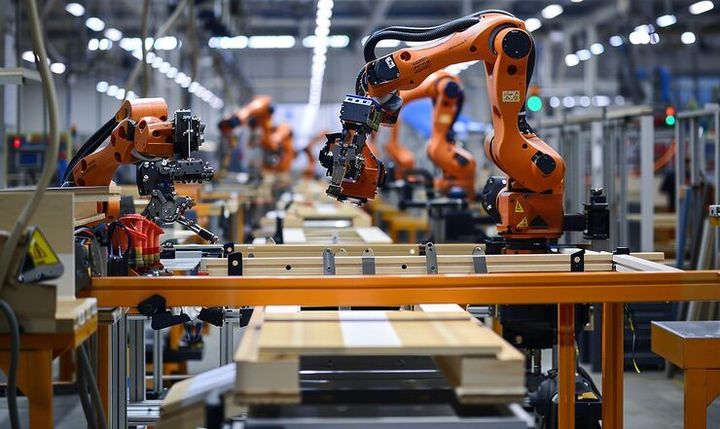
Industrial robotics manufacturers develop and produce robotic machines and related automation technologies used in factories and production environments. These systems can perform tasks such as welding, assembly, material handling, painting, packaging, palletizing, and machine tending.
The field includes several robot categories, including articulated robots, SCARA robots, delta robots, Cartesian robots, collaborative robots, and autonomous robotic systems. A typical industrial robot combines mechanical components, motors, sensors, controllers, software, and end-effectors.
The global industrial robotics sector has expanded significantly. According to the International Federation of Robotics (IFR), 542,000 industrial robots were installed worldwide in 2024, with annual installations exceeding 500,000 units for the fourth consecutive year.
Manufacturers therefore play an important role in industrial automation, robotics engineering, smart manufacturing, and Industry 4.0 development.
Why Industrial Robotics Matters Today
Industrial robots are increasingly used where manufacturers need consistent movement, repeatable processes, accurate positioning, and safer handling of demanding production tasks.
Key applications include:
- Automotive manufacturing and component assembly
- Electronics and semiconductor production
- Food and beverage processing
- Metal fabrication and welding
- Pharmaceutical and laboratory equipment production
- Packaging and palletizing
- Warehousing and material movement
- Machine tending and quality inspection
India is also experiencing increased industrial robot adoption. IFR reported 9,100 industrial robot installations in India during 2024, representing a 7% increase from the previous year. Automotive manufacturing accounted for approximately 45% of installations.
For manufacturers, important evaluation factors include robot payload, reach, repeatability, operating speed, controller capabilities, vision integration, safety functions, energy requirements, and compatibility with existing production equipment.
Recent Robotics Developments
Artificial intelligence has become an important direction for industrial robotics. In February 2026, IFR highlighted the growing use of AI in robotics, including computer vision, machine learning, simulation, and more adaptable robotic systems.
IFR's January 2026 analysis identified five major trends: AI-powered robotics, convergence between information technology and operational technology, humanoid robots entering real-world testing, robotics addressing workforce shortages, and greater attention to safety, cybersecurity, and standards.
The global value of industrial robot installations reached US$16.7 billion, according to IFR's 2026 trends report.
| Area | Current Direction |
|---|---|
| AI | Better perception and adaptive control |
| Vision | Automated inspection and object recognition |
| Cobots | More human-robot collaboration |
| Connectivity | Greater integration with factory systems |
| Safety | Stronger focus on risk assessment |
| Simulation | Virtual testing and programming |
These developments are encouraging manufacturers to consider robotics as part of broader smart manufacturing strategies rather than as isolated machines.
Laws, Standards, and Policies in India
Industrial robotics in India is influenced by workplace safety requirements, machinery standards, and conformity frameworks.
The Occupational Safety, Health and Working Conditions Code, 2020 establishes requirements concerning workplace safety and hazardous operations. Its provisions include measures relating to protective equipment, safety policies, and risk controls for applicable workplaces.
Bureau of Indian Standards (BIS) has also developed standards covering industrial robot safety. A 2024 BIS draft aligned IS/ISO 10218 Part 1 with updated international requirements for industrial robots and addressed areas such as design and operating modes.
In July 2025, BIS also circulated a draft revision concerning the safety of integrated manufacturing systems, including risk assessment and risk-reduction measures.
Applicable requirements can vary according to the equipment, factory, application, and state-level rules, so manufacturers should verify the latest requirements before deployment.
Tools and Resources for Robotics Planning
Useful resources for researching industrial robotics include:
- Robot payload and reach calculators
- Production-cycle-time calculators
- Robot-cell layout templates
- Risk-assessment worksheets
- Machine safety checklists
- Robot programming simulators
- Digital-twin and factory simulation tools
- Industrial automation training materials
- Indian Standards search databases
- Robotics application guides
A structured comparison worksheet can help evaluate payload, reach, repeatability, cycle time, safety features, controller functions, communication protocols, and integration requirements.
Frequently Asked Questions
What do industrial robotics manufacturers produce?
They develop robotic arms, controllers, sensors, software, end-effectors, and related automation equipment designed for industrial production environments.
Which industries use industrial robots?
Automotive, electronics, metalworking, food processing, packaging, logistics, and other manufacturing sectors use industrial robots for repetitive and precision-oriented operations.
What is an articulated industrial robot?
An articulated robot uses multiple rotary joints to provide a wide range of movement. It is commonly used for welding, assembly, material handling, painting, and machine tending.
Are industrial robots safe around people?
Safety depends on the robot, application, integration, risk assessment, guarding, control systems, and operating procedures. Applicable safety standards should be considered during system design and deployment.
How is AI changing industrial robotics?
AI can improve machine vision, object recognition, adaptive control, predictive analysis, simulation, and decision-making, allowing robots to handle more variable production environments.
Conclusion
Industrial robotics manufacturers are contributing to the continuing development of automated and connected factories. Current developments are centered on AI, machine vision, collaborative robotics, digital simulation, connectivity, and stronger safety practices.
For organizations researching robotics, understanding technical specifications, application requirements, safety standards, and integration needs is essential. In India, BIS standards and workplace safety frameworks provide important references for responsible industrial automation planning.
Disclaimer: This article is for general educational purposes and should not be treated as engineering, legal, regulatory, or workplace-safety advice. Requirements can change, so applicable Indian rules and standards should be verified before implementation.