Learn About Rock Crushers: Explanation, Tips & Helpful Information
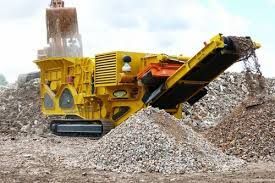
What Rock Crushers Are and Why They Exist Rock crushers are mechanical machines used to break down large rocks into smaller, usable materials such as gravel, aggregates, or mineral fragments. They support industries including construction, mining, road development, and environmental restoration. Since raw stone cannot always be used in its natural state, rock crushers make material easier to transport, handle, and use in engineered projects.
Multiple types exist—jaw crushers, cone crushers, gyratory crushers, and impact crushers. Each design applies compression, impact, or shear to reduce material size. As technology developed, rock crushers shifted from simple tools to advanced systems with automated controls, improved energy efficiency, and digital monitoring features.
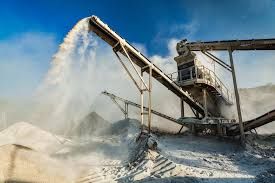
Importance: Why Rock Crushers Matter Today
Rock crushers support essential tasks in infrastructure growth, mining operations, and recycling programs. The demand for building materials and aggregates makes crushing equipment a core part of material processing.
Rock crushers are important for:
-
Infrastructure construction
-
Mineral preparation and mining operations
-
Recycled concrete and asphalt processing
-
Geological research and mechanical engineering tasks
They help solve practical industrial challenges:
-
Ensuring consistent material sizes
-
Reducing transportation weight
-
Improving mineral separation processes
-
Enabling sustainable recycling of old structures
As global construction and mining expand, reliable crushing systems remain vital.
Recent Updates: Trends and Developments (2023–2025)
Over the last two years, the rock-crushing field has seen notable advancements.
Key updates include:
-
Automation improvements (2023–2024): Sensors and digital monitoring systems became more common, helping detect wear patterns and performance variations.
-
Eco-friendly machinery (2024): Electric and hybrid crushing units gained traction as industries focused on reducing emissions.
-
New wear-resistant components (2024–2025): Stronger alloys and ceramic parts increased machine lifespan.
-
Growth of mobile crushing units (2024): Compact crushers for on-site work became widely adopted.
-
Rise in recycling applications (2024–2025): Infrastructure renewal increased the demand for recycled aggregates, making specialized recycling crushers more common.
Laws and Policies Affecting Rock Crushers
Rock crushers are influenced by various environmental and safety regulations. Although specific rules differ by country, major regulatory themes remain similar across construction, mining, and industrial machinery fields.
Common regulatory areas include:
Environmental standards:
-
Dust-control requirements
-
Noise emission limits
-
Air-quality monitoring
-
Waste-material handling protocols
Safety regulations:
-
Machine guarding guidelines
-
Mandatory emergency-stop systems
-
Operator training standards
-
Periodic inspection and maintenance records
Mining and quarrying guidelines:
-
Extraction permits
-
Site rehabilitation plans
-
Vibration impact monitoring
-
Geological survey compliance
Some government programs also support research into sustainable aggregate production, energy-efficient machinery, and environmentally responsible mining practices.
Tools and Resources Related to Rock Crushers
Various tools and references help improve understanding and safe handling of rock-crushing equipment.
Technical resources:
-
Mechanical engineering reference books
-
Aggregate processing manuals
-
Mining equipment technology guides
-
Hardness and material-strength charts
Digital tools and apps:
-
Equipment performance log apps
-
Vibration-measurement tools
-
Maintenance checklist apps
-
Material-size calculators
Reference materials:
-
Crushing-operation checklists
-
Daily inspection templates
-
Maintenance scheduling sheets
-
Dust-control planning documents
These resources support efficient, safe, and informed use of crushing machinery.
Table: Common Types of Rock Crushers and Their Uses
| Type of Crusher | Primary Mechanism | Typical Use Cases | Material Output |
|---|---|---|---|
| Jaw Crusher | Compression | Primary crushing in mining and construction | Coarse, uniform pieces |
| Cone Crusher | Compression & rotation | Secondary crushing for aggregates | Medium to fine particles |
| Impact Crusher | High-speed impact | Recycling and medium-hard materials | Fine, shaped particles |
| Gyratory Crusher | Compression | High-capacity large-scale crushing | Consistent heavy output |
| Mobile Crusher | Varies | On-site crushing and flexible projects | Variable, on-demand sizes |
What is the main purpose of a rock crusher?
It breaks large rocks into smaller, workable pieces for construction, mining, and recycling applications.
Which crusher works best for hard materials?
Jaw crushers and gyratory crushers perform best with very hard or abrasive rock due to their compression-based design.
How is a cone crusher different from an impact crusher?
A cone crusher uses compression for uniform output, while an impact crusher relies on high-speed impact to create finer and often more irregular fragments.
Why is dust control important during rock crushing?
It protects worker health, supports environmental standards, and prevents surrounding-area contamination.
Are mobile crushers useful for large projects?
Mobile crushers are increasingly efficient and provide flexibility for on-site operations, although stationary units may offer higher capacity.
Conclusion
Rock crushers remain central to modern construction, mining, and recycling operations. They transform raw and recycled materials into consistent, usable forms while supporting infrastructure development, mineral extraction, and sustainable practices. Recent improvements in automation, energy efficiency, and durability continue to make crushing systems more reliable and adaptable.
Understanding the types of crushers, regulations, technical tools, and maintenance considerations helps create safer and more efficient operations across material-processing fields. As global demand for aggregates grows, rock crushers will continue playing a crucial role in supporting industrial and engineering needs.