PLC Automation Systems: Guide to Industrial Control
PLC automation systems help industries control machines, monitor processes, improve consistency, and connect factory equipment with modern digital technologies.
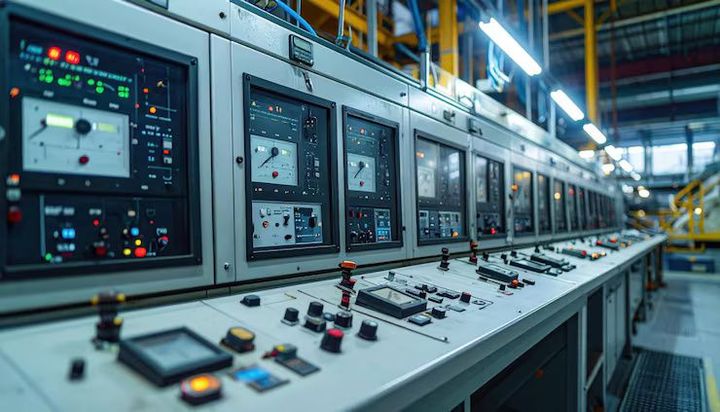
Programmable Logic Controller (PLC) automation systems are industrial control technologies used to operate machines and production processes automatically. A PLC receives information from sensors, processes programmed instructions, and sends commands to equipment such as motors, valves, pumps, conveyors, and actuators.
PLC systems became important as industries needed more reliable and flexible alternatives to complex hard-wired control arrangements. Today, PLC programming, industrial control systems, machine automation, and factory automation are used across manufacturing, water treatment, energy, food processing, packaging, and other industrial environments.
A typical system contains a PLC, input and output modules, sensors, communication networks, programming software, and connected machinery. Common programming methods include Ladder Diagram, Function Block Diagram, Structured Text, and Sequential Function Chart.
Why PLC Automation Matters Today
Modern manufacturing depends on accurate control, repeatable processes, and continuous monitoring. PLC automation can help coordinate several machine operations through programmed logic while allowing operators to monitor important process conditions.
The technology affects factory operators, automation engineers, maintenance teams, system designers, and industrial organizations.
Key applications include:
- Conveyor and material-handling automation
- Motor and pump control
- Packaging and processing equipment
- Water and wastewater systems
- Industrial machine monitoring
- Energy and utility management
- Production-line sequencing
PLC-based industrial automation can also connect with Human-Machine Interfaces (HMIs), Supervisory Control and Data Acquisition (SCADA) systems, industrial networks, and manufacturing data platforms.
| PLC Element | Main Function |
|---|---|
| CPU | Executes the control program |
| Input module | Receives sensor signals |
| Output module | Controls connected equipment |
| HMI | Displays process information |
| Communication network | Exchanges industrial data |
Recent Developments in PLC Technology
One important development occurred on May 22, 2025, when IEC published IEC 61131-3:2025, the fourth edition of the standard covering programming languages for programmable controllers. It includes Structured Text, Ladder Diagram, Function Block Diagram, and Sequential Function Chart, along with updated programming features.
In July 2026, IEC also published the IEC 61131 series collection, bringing together the current parts of the programmable-controller standards series.
Another major trend is industrial cybersecurity. PLCs are increasingly connected to business networks, remote monitoring systems, and industrial communication platforms. This increases the importance of network segmentation, access controls, secure configurations, vulnerability management, and monitoring.
India's CERT-In published cybersecurity guidance during 2025 and 2026 addressing areas such as cyber defense, audits, and industrial communication protocols. Its guidance discusses technologies including Modbus, DNP3, PROFINET, OPC UA, BACnet, IEC 61850, and HART.
Laws, Standards, and Policies in India
PLC automation in India can be influenced by applicable industrial safety requirements, electrical standards, cybersecurity expectations, and Bureau of Indian Standards (BIS) frameworks.
BIS identifies Indian standards related to programmable controllers, including IS 14254 Part 1 and IS 14254 Part 2, which correspond to relevant IEC standards for programmable controllers and equipment requirements. BIS also lists industrial automation and control-system cybersecurity standards based on the IEC 62443 family.
In July 2025, BIS published a draft Indian Standard aligned with ISO 11161:2025, addressing safety requirements for integrating machinery into manufacturing systems.
For connected industrial environments, organizations should also consider applicable CERT-In directions and cybersecurity frameworks. CERT-In's 2025 cybersecurity audit guidance provides a structured approach for organizations and auditors addressing cybersecurity controls and deficiencies.
Requirements can vary according to the industry, machinery, infrastructure, and type of installation.
Tools and Resources for Learning PLC Automation
People learning PLC automation can use several types of resources:
- PLC programming simulators for logic practice
- Ladder Logic editors for control-program development
- HMI design tools for operator-interface concepts
- SCADA platforms for process visualization
- Industrial network monitoring tools
- PLC troubleshooting checklists
- Electrical and control-system diagrams
- IEC 61131 programming references
- Industrial cybersecurity assessment frameworks
- Digital-twin and automation simulation environments
For beginners, learning basic electrical logic, sensors, actuators, ladder programming, industrial communication, and troubleshooting provides a useful foundation.
Frequently Asked Questions
What is a PLC?
A PLC is a programmable industrial controller that processes input signals and executes programmed logic to control connected equipment.
What industries use PLC automation?
PLC systems are used in manufacturing, packaging, water treatment, energy, food processing, material handling, and many other industrial applications.
Which programming languages are used with PLCs?
Common IEC 61131-3 programming languages include Ladder Diagram, Structured Text, Function Block Diagram, and Sequential Function Chart.
Why is PLC cybersecurity important?
Connected PLC environments can be exposed to unauthorized access, malicious software, network attacks, or inappropriate configuration. Network segmentation, authentication, monitoring, and secure communication can reduce these risks.
Is PLC automation the same as robotics?
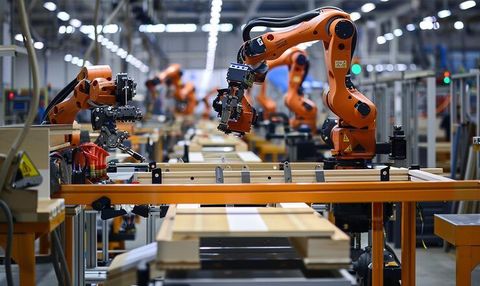
No. PLCs primarily provide control logic and process coordination, while industrial robots are specialized machines designed for programmable physical movement. They can operate together within an automated production system.
Conclusion
PLC automation systems provide a structured way to control industrial machines and processes. Their role is expanding as factories connect controllers with HMIs, SCADA platforms, industrial networks, data systems, and digital technologies.
Recent updates to IEC 61131-3 and increasing attention to industrial cybersecurity show how PLC technology continues to evolve. In India, applicable BIS standards, machinery safety frameworks, and cybersecurity guidance are important considerations when designing or maintaining automated industrial environments.
The most effective approach is to understand the complete control system rather than focusing only on the PLC itself. Sensors, controllers, communication networks, software, machinery, safety measures, and cybersecurity all contribute to dependable industrial automation.
Disclaimer: This article provides general educational information and should not be treated as engineering, regulatory, electrical-safety, or cybersecurity advice for a specific installation. Applicable requirements should be verified for the relevant industry and location.