Solar Water Heaters: A Simple Guide to Solar Hot Water
Solar water heaters use sunlight to heat water and can reduce dependence on conventional water-heating energy while supporting efficient building design.
A solar water heater is a system that uses sunlight to heat water for household or commercial use. It generally contains solar collectors, an insulated storage tank, pipes, and control components. The collectors absorb solar radiation and transfer heat to water, which is then stored for later use.
The technology exists because heating water can require substantial energy, particularly in homes, hotels, hospitals, hostels, and other buildings with regular hot-water demand.
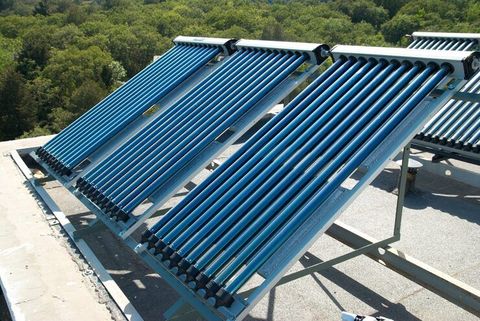
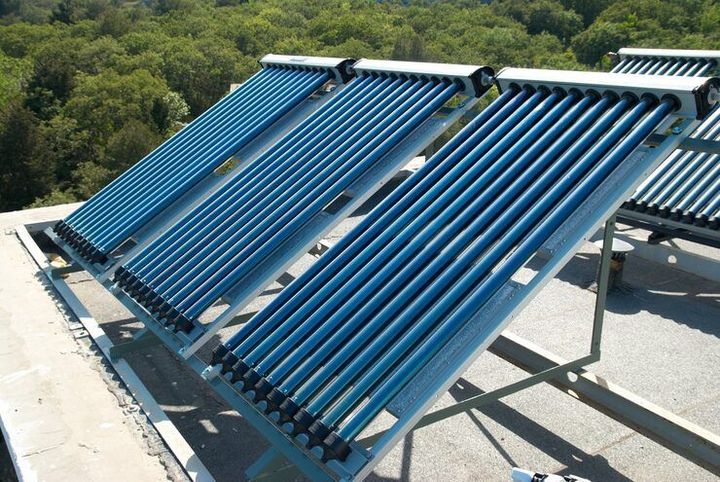
Two common collector technologies are flat-plate collectors and evacuated tube collectors. System design depends on climate, available sunlight, hot-water demand, roof space, and whether backup heating is needed.
In India, domestic solar water heating systems commonly cover capacities around 100–500 litres per day, while larger installations can serve institutions and commercial buildings.
Why Solar Water Heating Matters
Solar water heating connects renewable energy with everyday energy consumption. Instead of relying entirely on an electric or fuel-based water heater, sunlight provides part or, under suitable conditions, much of the required heat.
This can matter for:
- Homes with regular hot-water requirements
- Hotels and hospitality buildings
- Hospitals and healthcare facilities
- Hostels and educational institutions
- Restaurants and commercial kitchens
- Buildings designed around energy-efficiency standards
The technology can also reduce dependence on conventional water-heating systems and help lower associated electricity demand. However, actual performance varies with weather, collector orientation, system design, water demand, and maintenance.
For commercial and institutional buildings, solar thermal technology, hot-water energy efficiency, thermal storage, heat recovery, and building energy management are increasingly relevant considerations.
Recent Developments in Solar Water Heating
India's solar-thermal framework has continued to emphasize technical standards and quality control. The Ministry of New and Renewable Energy lists standards covering evacuated-tube systems, collector tubes, storage tanks, system performance, durability, reliability, and solar domestic water-heating practice.
A notable development was the Solar Thermal Systems, Devices and Components (Quality Control) Order, 2024, with related clarification issued by MNRE on 8 October 2024.
In 2025 and 2026, MNRE also continued publishing notifications concerning solar-system quality-control implementation. A notification dated 3 July 2026 covers implementation of the Solar Systems, Devices and Components Goods Order, 2025 through 31 December 2026, subject to the terms stated in the notification.
These developments show the continuing focus on technical conformity and product quality across India's solar-energy ecosystem.
Laws, Standards, and Building Policies
Solar water heating in India is affected by national standards as well as building-energy frameworks and local implementation.
The Bureau of Energy Efficiency's Energy Conservation and Sustainable Building Code (ECSBC) 2024 includes requirements concerning service-water heating and references relevant Indian Standards for solar water-heating performance.
For certain ECSBC Plus hospitality and healthcare buildings, the code specifies solar water-heating equipment capable of providing at least 60% of the total hot-water design requirement, with an exception where specified solar photovoltaic capacity is installed. Super ECSBC buildings have a 100% solar-water-heating requirement under the stated provisions, again subject to the code's exception.
Applicable requirements can differ according to building type, state adoption, local building regulations, and the particular code classification.
Tools and Resources for Solar Water Heating
Useful resources for understanding and planning solar hot-water systems include:
- Solar radiation calculators for estimating available sunlight
- Hot-water demand calculators for estimating daily requirements
- Solar collector sizing worksheets for preliminary system planning
- Roof-orientation and shading tools for evaluating solar exposure
- Energy-efficiency calculators for comparing heating requirements
- BIS standards information for technical specifications
- Government renewable-energy portals for current policies and technical guidance
- Building-energy code documents for commercial and institutional requirements
These tools provide estimates rather than guaranteed performance. Detailed system design should account for local climate, water quality, demand patterns, and applicable technical requirements.
Frequently Asked Questions
How does a solar water heater work?
Solar collectors absorb sunlight and convert it into thermal energy. This heat is transferred to water, which is stored in an insulated tank for later use.
Can solar water heaters work during cloudy weather?
Yes, but performance generally decreases when available solar radiation is lower. Many systems therefore use an auxiliary heating arrangement when solar heat is insufficient.
What are the main types of solar collectors?
The commonly used types include flat-plate collectors and evacuated tube collectors. Their performance characteristics differ according to climate and system design.
How much hot water can a solar water heater provide?
Capacity depends on the storage volume, collector area, climate, system configuration, and daily demand. MNRE notes that 100–500 litres per day systems are suited to many domestic applications.
Are there standards for solar water-heating systems in India?
Yes. India has multiple relevant BIS standards covering collectors, storage tanks, system performance, durability, reliability, and installation practices.
Conclusion
Solar water heaters are an established form of solar thermal technology that can provide hot water while reducing reliance on conventional water-heating energy. Their effectiveness depends on sunlight availability, system sizing, installation conditions, storage, insulation, and usage patterns.
India's current framework includes technical standards and building-energy provisions that encourage appropriate performance and quality. Understanding solar thermal systems, energy efficiency, collector technology, hot-water demand, and building regulations can help readers make informed decisions about this renewable-energy application.
Disclaimer: This article is provided for general educational purposes. Regulations, standards, building-code requirements, and government programs may change. Always verify the applicable requirements for the relevant location and building type before making technical or regulatory decisions.