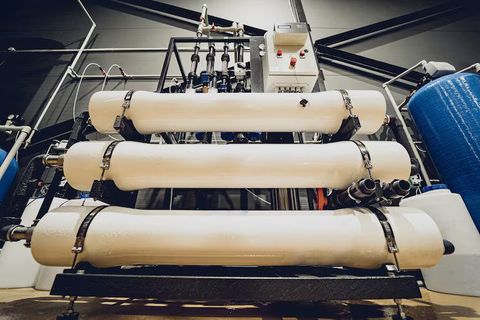
Refinery Safety Instrumentation: A Practical Guide to Risks
Refinery safety instrumentation helps monitor critical process conditions, detect hazards, and trigger protective actions before abnormal situations become serious incidents.
Refinery safety instrumentation is a combination of sensors, alarms, control systems, shutdown devices, and other protective technologies used to monitor industrial processes. Refineries handle high temperatures, pressures, flammable hydrocarbons, and potentially hazardous chemicals, making accurate process monitoring essential.
A refinery instrumentation system can measure variables such as pressure, temperature, flow, liquid level, gas concentration, and equipment conditions. When measurements move outside defined operating limits, alarms or automated protective functions can alert operators or initiate predefined safety actions.
Safety instrumentation is closely associated with process safety management, industrial automation, functional safety, safety instrumented systems (SIS), emergency shutdown systems, and refinery control systems.
Importance
Modern refineries operate complex processes continuously. A small change in pressure, temperature, or chemical conditions can potentially develop into equipment damage, fire, explosion, or an uncontrolled release.
Safety instrumentation helps reduce these risks by providing several layers of protection.
Important functions include:
- Continuous monitoring of critical process variables
- High- and low-limit alarms
- Emergency shutdown functions
- Gas and flame detection
- Pressure protection monitoring
- Interlocks between process equipment
- Safety instrumented functions
- Condition monitoring for critical equipment
These systems affect operators, maintenance personnel, process engineers, emergency teams, nearby communities, and the environment. Accurate instrumentation also supports industrial process safety, hazardous-area monitoring, reliability engineering, and risk assessment.
A well-designed safety architecture does not depend on a single device. Instead, different protective layers can work together so that a failure in one layer does not automatically result in a major incident.
Recent Updates
Safety instrumentation continues to evolve alongside digital industrial automation. One significant development occurred in July 2026, when the IEC published the IEC 61511:2026 series. IEC 61511 is an important international framework for functional safety and safety instrumented systems in the process industry. The 2026 publication continues to emphasize functional safety, process-industry applications, and areas such as cybersecurity and modern industrial automation.
Another important trend is the increasing connection between process safety and industrial cybersecurity. Digital sensors, distributed control systems, safety controllers, and industrial networks can improve visibility, but they also require appropriate access controls, system design, testing, and change management.
Organizations are also placing greater emphasis on accurate Piping and Instrumentation Diagrams (P&IDs), alarm management, proof testing, equipment integrity, and documented safety procedures.
Laws and Policies
Regulatory requirements depend on the country and the type of refinery. In the United States, petroleum refineries can be subject to OSHA's Process Safety Management (PSM) standard, 29 CFR 1910.119. The standard includes requirements related to process information, hazard analysis, operating procedures, mechanical integrity, management of change, and emergency shutdown systems.
OSHA specifically identifies controls, monitoring devices, sensors, alarms, interlocks, and emergency shutdown systems within the mechanical-integrity requirements for covered processes. Inspection and testing must follow recognized engineering practices.
The U.S. Environmental Protection Agency also administers the Risk Management Program (RMP) under Clean Air Act Section 112(r). Covered facilities must address hazard assessment, accident prevention, and emergency response requirements. In February 2026, EPA proposed revisions intended to change aspects of the RMP framework.
Tools and Resources
Useful resources for understanding refinery safety instrumentation include:
- P&ID review templates
- Safety instrumented function worksheets
- Layer of Protection Analysis (LOPA) templates
- Process Hazard Analysis checklists
- Alarm management worksheets
- Functional safety lifecycle checklists
- Instrument calibration records
- Proof-test planning templates
- Process safety performance indicators
- Industrial cybersecurity assessment frameworks
- Government process-safety guidance and regulatory databases
These resources can help organizations document instrumentation requirements and evaluate protective layers systematically.
FAQs
What is refinery safety instrumentation?
It is the collection of sensors, alarms, shutdown systems, interlocks, and related technologies used to monitor and protect refinery processes.
What does a safety instrumented system do?
A Safety Instrumented System (SIS) detects defined hazardous conditions and performs predetermined protective actions, such as placing a process in a safer state.
Why are alarms important in refinery operations?
Alarms alert operators when monitored conditions reach defined limits. They provide information that can support timely corrective action before conditions become more hazardous.
What is IEC 61511?
IEC 61511 is an international functional-safety standard for safety instrumented systems used in the process industry. Its 2026 series was published in July 2026.
Are refinery instrumentation systems covered by U.S. regulations?
Certain refinery processes are covered by OSHA's Process Safety Management requirements, including provisions addressing controls, monitoring devices, alarms, interlocks, and emergency shutdown systems.
Conclusion
Refinery safety instrumentation forms an important layer of modern process safety. Sensors, alarms, interlocks, shutdown systems, and safety instrumented functions help identify abnormal conditions and support protective responses.
As refineries become more digitally connected, safety engineering increasingly needs to consider functional safety, equipment integrity, cybersecurity, accurate process documentation, and regular testing together. Understanding these principles helps general readers recognize how instrumentation contributes to safer and more controlled refinery operations.
Disclaimer:
This article is provided for general educational purposes and does not replace applicable laws, engineering standards, site-specific risk assessments, professional engineering judgment, or regulatory guidance.