Drone Camera Rentals Explained: Overview, Options & Essential Knowledge
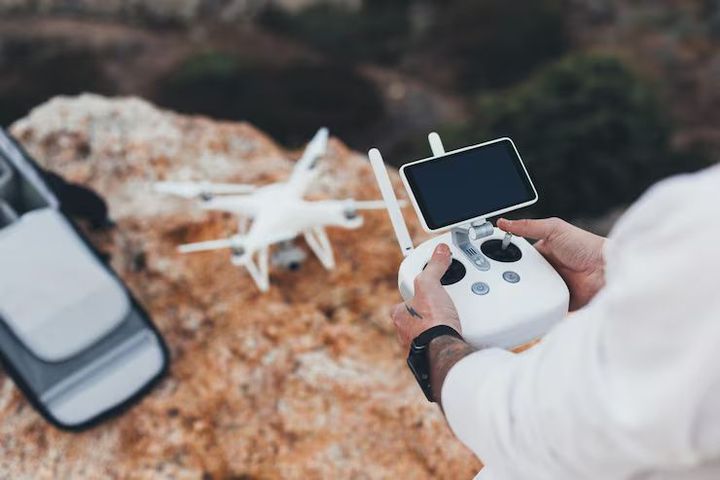
Drone camera rentals refer to short-term access to unmanned aerial vehicles equipped with cameras for capturing aerial images and video. These rentals allow individuals and organizations to use advanced aerial imaging technology without long-term ownership. Drone cameras are used across media production, infrastructure inspection, mapping, research, education, and event documentation.
The concept exists because drone technology advances rapidly and requirements vary by project. Aerial imaging needs may be temporary, location-specific, or dependent on specialized camera capabilities. Rentals make it possible to access suitable equipment for a defined task while avoiding storage, maintenance, and long-term management.
Over time, drone camera rentals have expanded beyond basic flight platforms to include stabilized gimbals, high-resolution sensors, and configurable payloads, reflecting broader adoption of aerial data collection.
Why Drone Camera Rentals Matter Today
Drone camera rentals matter today because aerial perspectives are increasingly used for analysis, documentation, and storytelling. At the same time, regulations, technology changes, and varied use cases make ownership unnecessary for many users.
This topic affects several groups:
-
Media and content creators working on short projects
-
Engineers and planners documenting sites
-
Researchers and educators conducting field studies
-
Event teams capturing temporary activities
Drone camera rentals help solve practical challenges such as accessing elevated viewpoints, covering large areas efficiently, and capturing repeatable aerial data. They also support responsible use by aligning equipment capability with specific needs.
Key reasons drone camera rentals remain relevant include:
-
Rapid innovation in camera and sensor technology
-
Project-based demand for aerial imaging
-
Need for standardized equipment across teams
-
Regulatory requirements that influence usage planning
As aerial data becomes more common, flexible access models have gained importance.
Basics of How Drone Camera Rentals Work
The drone camera rental process is designed to align equipment availability with project timelines and compliance needs. While steps vary by location, the overall flow is consistent.
The basic process typically includes:
-
Defining the intended use and environment
-
Selecting a drone and camera configuration
-
Completing identity and usage documentation
-
Equipment handover and pre-flight checks
-
Return and condition verification
In many cases, rentals include guidance on operation, safety checks, and basic setup. This helps ensure the equipment is used as intended and returned in working condition.
A simplified process overview is shown below:
| Process Step | Purpose |
|---|---|
| Use Definition | Match capability to task |
| Configuration Selection | Camera and flight needs |
| Documentation | Accountability and compliance |
| Deployment | Aerial operation |
| Return | Asset reconciliation |
This structure supports efficient and responsible short-term use.
Common Drone Camera Rental Options
Drone camera rental options vary based on flight capability, camera specifications, and stabilization systems. Understanding these options helps clarify suitability for different tasks.
Common rental categories include:
-
Compact camera drones, suitable for basic aerial imaging
-
Professional camera drones, with advanced stabilization and sensors
-
Mapping and survey drones, designed for data capture accuracy
-
FPV drones, used for dynamic motion capture
A simplified overview is shown below:
| Drone Type | Typical Use |
|---|---|
| Compact Camera | General aerial views |
| Professional Camera | Film and documentation |
| Mapping/Survey | Spatial data collection |
| FPV | Dynamic video sequences |
These options allow users to align image quality and flight behavior with project requirements.
Camera and Sensor Considerations
The camera system is a central factor in drone selection. Different projects require different resolutions, frame rates, and sensor characteristics.
Common camera-related considerations include:
-
Image and video resolution
-
Sensor size and low-light performance
-
Stabilization through gimbals
-
Photo and video format compatibility
Some applications prioritize still imagery accuracy, while others require smooth motion video. The camera choice influences both output quality and flight planning.
A simplified comparison is shown below:
| Camera Feature | Practical Impact |
|---|---|
| Resolution | Image detail |
| Sensor Size | Light sensitivity |
| Gimbal Stabilization | Smooth footage |
| Frame Rate | Motion clarity |
Understanding these elements helps set realistic expectations for aerial outputs.
Typical Use Cases for Drone Camera Rentals
Drone camera rentals support a wide range of short-term applications across industries. These use cases emphasize flexibility and project-specific needs.
Common applications include:
-
Site documentation and progress tracking
-
Event and outdoor activity recording
-
Academic and environmental research
-
Infrastructure observation and inspection
-
Educational demonstrations and training
A use-case overview is shown below:
| Application | Objective |
|---|---|
| Site Documentation | Visual records |
| Events | Temporary aerial coverage |
| Research | Data collection |
| Education | Practical learning |
These use cases demonstrate how rentals support targeted objectives without permanent ownership.
Recent Updates and Aerial Imaging Trends
Over the past year, drone camera rental usage has reflected advances in imaging quality, automation, and safety features.
In January 2025, industry discussions highlighted broader availability of drones with enhanced obstacle avoidance systems. These features support safer operation in complex environments.
By June 2025, increased use of high-dynamic-range (HDR) imaging was observed, improving image clarity in varied lighting conditions.
Another trend noted in October 2025 involved improved battery management systems and flight planning software. These updates help extend usable flight time and improve mission predictability.
A general comparison of earlier and recent trends is shown below:
| Aspect | Earlier Pattern | Recent Trend (2025) |
|---|---|---|
| Safety Features | Basic sensors | Advanced avoidance |
| Image Quality | Standard dynamic range | Enhanced HDR |
| Flight Planning | Manual estimation | Software-assisted |
| Battery Use | Fixed cycles | Optimized management |
These trends focus on reliability and consistency rather than increased speed or range alone.
Laws, Rules, and Regulatory Context in India
In India, drone camera usage is governed by aviation and airspace regulations rather than rental-specific laws. Compliance applies regardless of ownership or rental status.
Key regulatory influences include:
-
Civil Aviation Requirements issued by DGCA
-
Unmanned Aircraft System (UAS) rules
-
Airspace zoning and permission frameworks
-
Local authority guidelines for specific locations
During 2024–2025, regulatory emphasis continued on digital permission systems, airspace awareness, and operator accountability. Users are generally expected to understand flight zones, follow identification requirements, and comply with operational limits.
Awareness of applicable rules is essential for lawful and responsible drone operation.
Tools and Resources Supporting Drone Camera Use
Several planning tools and informational resources support effective use of rented drone cameras. These resources focus on preparation, safety, and data management.
Helpful tools include:
-
Airspace awareness and zoning maps
-
Flight planning applications
-
Pre-flight safety checklists
-
Battery and flight time calculators
-
Data storage and backup frameworks
Key planning factors often reviewed are shown below:
| Factor | Why It Matters |
|---|---|
| Airspace Status | Compliance |
| Weather Conditions | Flight safety |
| Battery Capacity | Mission planning |
| Data Handling | Output reliability |
| Safety Checks | Risk reduction |
Using these tools supports predictable and compliant aerial operations.
Frequently Asked Questions About Drone Camera Rentals
Who typically uses drone camera rentals?
They are used by media teams, researchers, educators, planners, and project-based users requiring temporary aerial imaging.
Are rented drones suitable for professional use?
Yes. Professional-grade options are commonly available for documentation and analysis tasks.
Is prior experience needed to use a rented drone?
Basic operational knowledge is important, and users are expected to follow safety and regulatory guidelines.
Do drone camera rentals include accessories?
Accessories such as batteries or controllers may be included depending on configuration and usage needs.
Is regulatory compliance required for rented drones?
Yes. Compliance applies to the operator and the flight activity, regardless of ownership.
Conclusion
Drone camera rentals provide flexible access to aerial imaging technology for short-term and project-specific needs. They support a wide range of applications by allowing users to match equipment capabilities with defined objectives.
Recent trends highlight improved safety features, enhanced imaging quality, and better flight planning support. At the same time, regulatory frameworks in India continue to emphasize airspace awareness, accountability, and responsible operation.