Solar Heating Equipment: Guide to Systems and Applications
Solar heating equipment uses sunlight to produce useful heat for water, buildings, and industrial applications. Learn about system types, recent developments, policies, tools, and practical considerations.
Solar heating equipment is designed to capture sunlight and convert it into useful thermal energy. Unlike solar photovoltaic systems, which primarily generate electricity, solar thermal systems focus directly on producing heat.
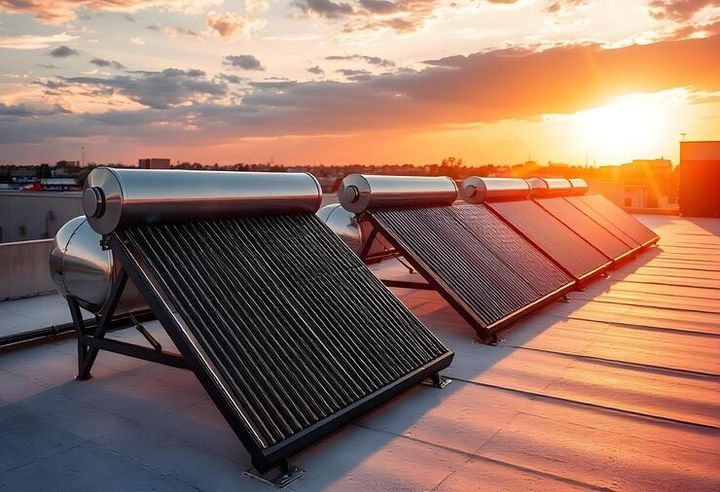
The technology has been used for decades in applications such as water heating, space heating, drying, and industrial processes. A typical solar thermal installation can include collectors, insulated pipes, pumps, heat exchangers, storage tanks, controls, and temperature sensors.
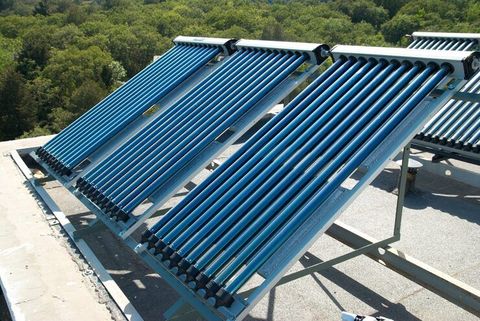
Solar collectors absorb solar radiation and transfer the resulting heat to water, air, or another heat-transfer fluid. The heated medium can then be stored or directed toward an application.
Common categories include:
- Flat-plate solar collectors
- Evacuated-tube collectors
- Unglazed collectors
- Concentrating solar thermal systems
- Solar air heating systems
- Solar process-heating equipment
Why Solar Heating Equipment Matters
Heating can represent a significant portion of energy use in homes, commercial buildings, hotels, institutions, and industrial facilities. Solar thermal technology provides another way to meet part of that thermal demand.
The technology is particularly relevant where hot water or moderate-temperature heat is required regularly.
Solar heating equipment can help address several challenges:
- Dependence on conventional heating fuels
- Energy consumption for hot-water production
- Industrial process-heat requirements
- Demand for lower-emission heating technologies
- Need for diversified renewable-energy systems
India has considerable solar resources, making solar thermal applications relevant across residential, commercial, and industrial settings. The Ministry of New and Renewable Energy describes low-, medium-, and high-temperature solar thermal technologies for different applications.
Main System Components
| Component | Main Function |
|---|---|
| Solar collector | Captures solar radiation |
| Circulation system | Moves the heat-transfer fluid |
| Storage tank | Holds heated water or fluid |
| Heat exchanger | Transfers thermal energy |
| Controller | Regulates system operation |
| Insulation | Reduces unwanted heat loss |
System selection depends on factors such as climate, available sunlight, required temperature, daily heat demand, installation area, and storage requirements.
Recent Updates and Technology Trends
Solar heating continues to develop alongside wider renewable-heat technologies. The International Energy Agency's Renewables 2025 analysis projects solar thermal heat consumption in buildings to increase by about 25% between 2025 and 2030.
A major trend is the integration of solar thermal systems with other technologies, including heat pumps and thermal energy storage. Such combinations can improve the flexibility of heating systems when sunlight varies during the day.
In June 2026, the IEA also highlighted solar thermal, large-scale heat pumps, geothermal energy, recovered heat, and thermal storage as important options for renewable district-energy systems.
Digital monitoring is another growing area. Modern controllers can track temperatures, circulation, storage conditions, and system performance, helping users understand how equipment operates under changing weather conditions.
Laws or Policies in India
Solar heating equipment in India is influenced by technical standards and quality-control requirements. MNRE lists the Solar Thermal Systems, Devices and Components (Quality Control) Order, 2024, along with subsequent clarifications.
India also maintains standards covering solar water-heating systems. MNRE lists standards including IS 16544, IS 13129, and IS 12976, which address areas such as system performance, durability, reliability, and installation practices.
Policies can change over time, so users and organizations should check current national and state-level requirements before planning a solar thermal installation.
Tools and Resources
Several general-purpose resources can help with research and planning:
- Solar radiation maps for estimating available sunlight
- Solar thermal sizing calculators
- Heat-load calculation worksheets
- Collector performance calculators
- Temperature and flow monitoring tools
- Energy-use spreadsheets
- System maintenance checklists
- Technical standards databases
- Renewable-energy policy databases
- Educational guides on solar thermal technology
A useful approach is to compare expected heat demand with available solar radiation before selecting a system configuration.
FAQs
What is solar heating equipment?
It is equipment that captures solar radiation and converts it into thermal energy for applications such as water heating, space heating, drying, and industrial processes.
What are the main types of solar thermal collectors?
Common types include flat-plate collectors, evacuated-tube collectors, unglazed collectors, and concentrating collectors. Each is suited to different temperature ranges and applications.
Can solar heating work on cloudy days?
Yes, but performance generally decreases when available solar radiation is lower. Storage or an auxiliary heating source can help maintain a consistent heat supply.
Is solar thermal different from solar photovoltaic?
Yes. Solar thermal technology produces useful heat, while photovoltaic technology converts sunlight into electricity.
Where is solar heating commonly used?
Applications include residential hot water, hotels, hospitals, commercial buildings, swimming pools, agricultural processes, and selected industrial heating operations.
Conclusion
Solar heating equipment is an established renewable-heat technology with applications ranging from domestic hot water to industrial process heating. Its effectiveness depends on sunlight availability, system design, temperature requirements, storage, and operating conditions.
Recent developments show growing interest in combining solar thermal technology with thermal storage, heat pumps, digital monitoring, and larger renewable heating networks. For anyone evaluating this technology, understanding system components, performance requirements, technical standards, and applicable policies is an important starting point.
Disclaimer:
This article is provided for general educational purposes. Technical requirements, standards, policies, and program conditions can change. Actual system performance depends on location, weather, equipment specifications, installation design, maintenance, and operating conditions. Readers should verify current requirements with appropriate official authorities and qualified technical professionals.